REVIEW · SPLIT
Split: Private Walking Tour in the Historical Town Center
Book on GetYourGuide →Operated by Sanja - Tour Guide in Split · Bookable on GetYourGuide
Split is a city you read like a book.
This private walking tour takes you through the Roman guts of Diocletian’s Palace and then outward to the Venetian-to-Yugoslav squares that explain why Split looks the way it does. I especially like how the route hits the big sights without wasting time, and how Sanja keeps the story clear even when the city shifts from Roman to medieval to modern rule. One consideration: the walking is continuous, and it is not suitable for wheelchair users.
You’ll start on the Riva promenade by the bronze model of old Split, then work your way through the street maze with a guide who can answer follow-up questions on the spot. In English (and also Italian, French, or Spanish), the experience is set up for first-time orientation, not just sightseeing checkmarks. Sanja, in particular, is praised for excellent explanations in French and for the way she connects architecture to daily life.
In This Review
- Key things this tour nails
- Finding the tour start on Riva, right by the palace entrance
- Diocletian’s Palace: from 4th-century structure to medieval neighborhood life
- Substructures (basements): what’s worth paying for, and what to expect
- Peristil and St. Domnius Cathedral: the spiritual center that follows the power center
- Jupiter’s Temple and the Golden Gate: Roman landmarks with medieval afterlife
- People’s Square, Fruit Square, and Prokurative: reading Split through rulers
- Nobel houses and a working synagogue: the quiet details you can miss alone
- The finish on Riva: turning the walk into your next steps
- Price and value: what $153 per group buys you in 105 minutes
- Who this private Split tour is perfect for (and who should skip it)
- Should you book this Split Private Walking Tour?
- FAQ
- FAQ
- Where does the tour meet?
- How long is the tour?
- Is this a private tour?
- What languages are offered?
- What major sights do we cover?
- Are entrance fees included?
- Is the tour suitable for wheelchair users?
- When can I cancel for a full refund?
Key things this tour nails
- Private pacing so you can actually hear and ask questions as you walk
- Diocletian’s Palace plus the Substructures area to understand how the whole complex functions
- Peristil, St. Domnius Cathedral, and the palace walls so you get the core layout quickly
- Squares outside the palace (like Pjaca, Fruit Square, and Prokurative) tied to shifting rulers
- End at the Riva so you finish with a natural “what next” view for self-guided wandering
Finding the tour start on Riva, right by the palace entrance
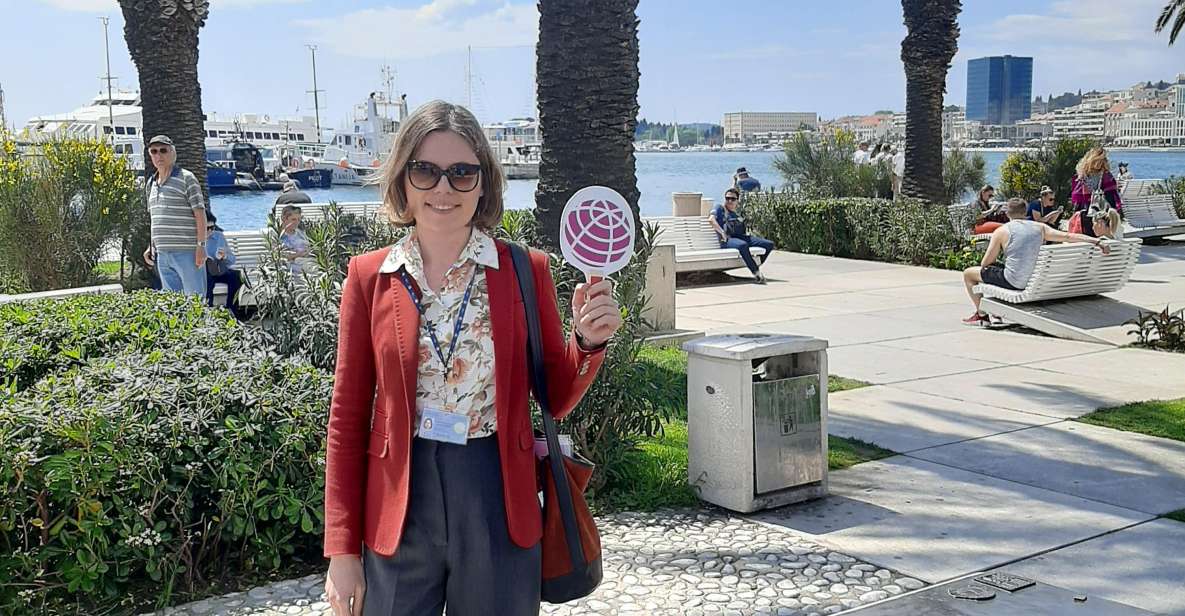
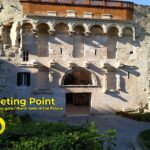
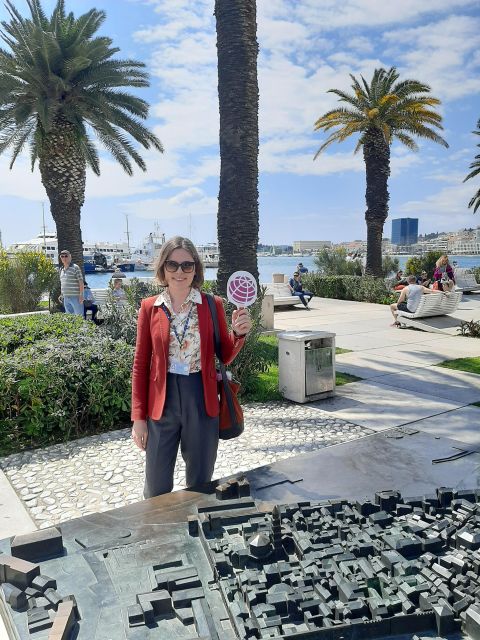
The meeting point is easy to spot: stand on Riva promenade by the bronze model of the historical core, in front of the south entrance to Diocletian’s Palace. If you’re arriving from anywhere in the old center, this is a good anchor point. It also means you’re not spending your limited time crossing town just to begin.
This kind of start matters. Split’s old town is compact, but it’s also easy to get turned around inside Diocletian’s Palace. Starting at the model helps your brain build a mental map before the streets start curving and compressing.
The tour runs about 105 minutes, so think of it as an orientation walk: enough time to connect key sights, but not so long that you’re exhausted before your next meal or sunset plan.
You can also read our reviews of more walking tours in Split


Diocletian’s Palace: from 4th-century structure to medieval neighborhood life
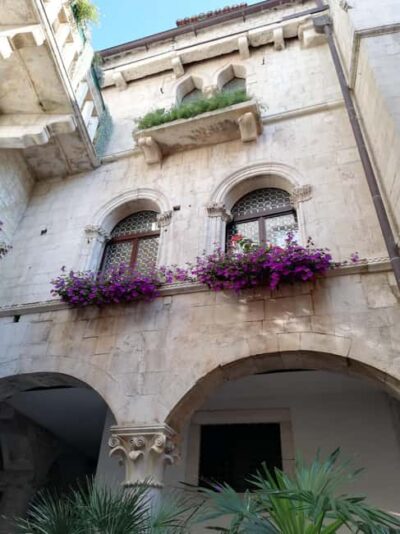
The first big block is a guided visit to Diocletian’s Palace, the oldest core of Split. You’ll get the sense that you’re not just looking at ruins—you’re walking through a living layout that absorbed later centuries. Inside the palace walls, a small medieval neighborhood developed, so you see a real mix of architectural styles in the same walking path.
What I like about this approach for you: it turns the palace from a single “wow” stop into a place with logic. You’ll learn how Roman planning influenced later street patterns, then watch medieval life adapt those spaces.
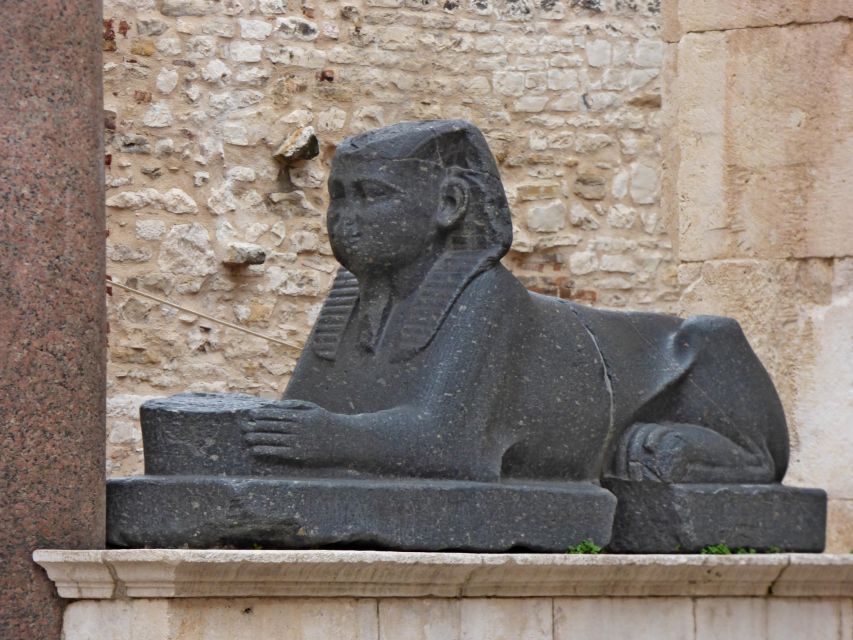
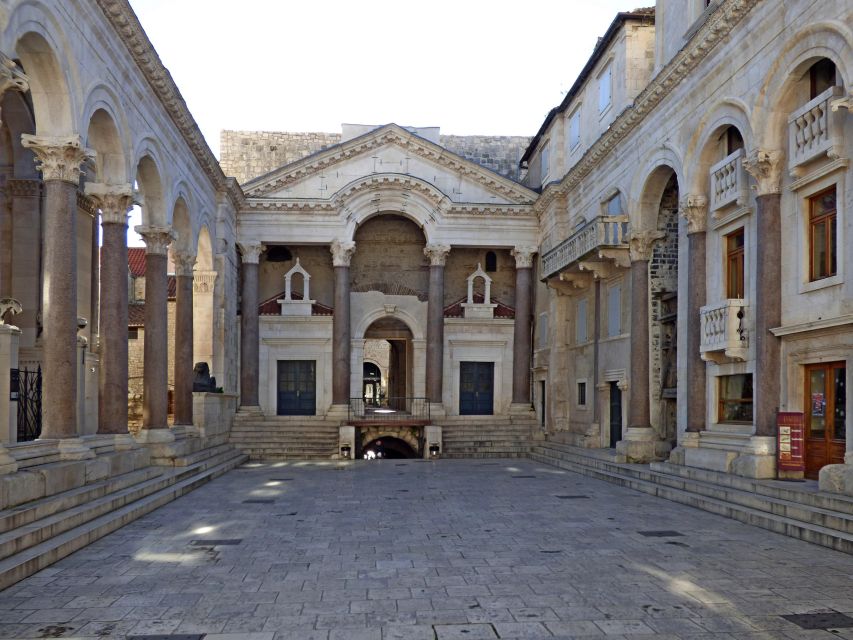
You also move through standout palace landmarks, including the Peristil (the central square), the palace walls and gates (four gates along the complex), and areas tied to the rulers’ monumental presence. Even if you’re not an architectural nerd, the guide’s job is to connect the shapes you see to the human story of power, defense, and community.
Substructures (basements): what’s worth paying for, and what to expect
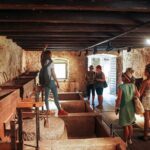
One of the most practical parts of this tour is the visit to the Substructures, also called the basements. This is not included in the base price, so plan for an entrance fee if you want to step in.
Why this stop can be a big value: the palace above ground is impressive, but the sub-level shows you the building’s “engine room.” You’ll better understand how the palace complex works as a system, not just as a pretty courtyard.
Potential drawback: if you decide you don’t want to pay extra for the substructures entrance, you could miss one of the clearest ways to make sense of the palace’s structure. The tour is set up so you can see the highlights either way, but the basement level is the one part where your decision directly affects your understanding.
Peristil and St. Domnius Cathedral: the spiritual center that follows the power center
After the palace streets, the route focuses on two anchor points of old Split: Peristil and St. Domnius’s Cathedral (often connected with the mausoleum).
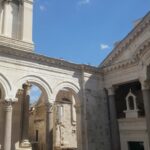
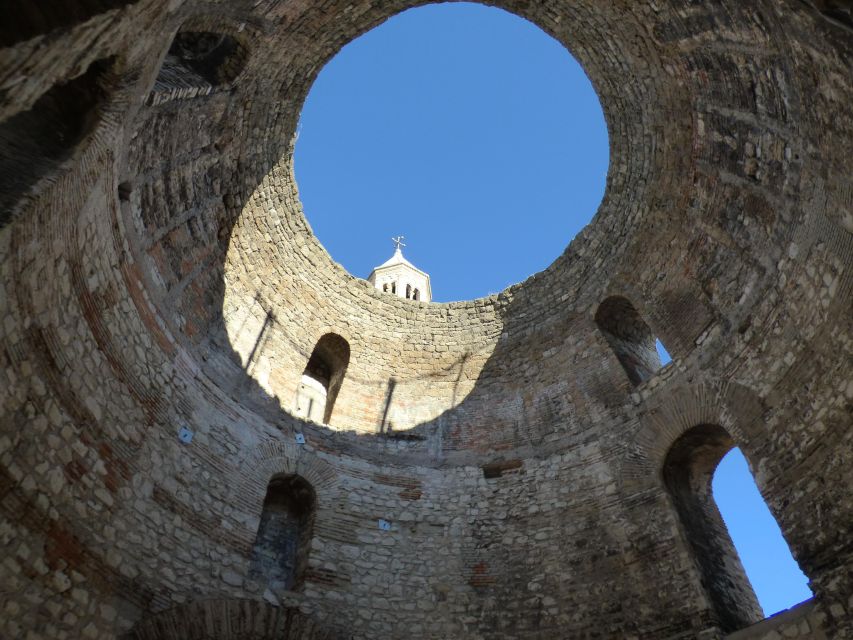
Peristil is the palace’s main square, and the guide’s walkthrough helps you see how a space like this functions. It’s not just a photo spot. It’s where movement, ceremony, and authority converge.
Then you pass by and visit the cathedral/memorial complex. Even in a short time, you’ll get a clearer idea of how early Christian and medieval identities grew out of Roman foundations. This is one of those stops where the story matters as much as the stone.
A quick timing note: cathedral-type spaces often slow you down a little, since you’ll be listening and taking in details. The tour pacing accounts for that, but wear shoes that handle cobblestones.
Jupiter’s Temple and the Golden Gate: Roman landmarks with medieval afterlife
Next you’ll encounter Jupiter’s Temple (often associated with the baptistery area). In this tour, you’ll see it as an external visit, with no additional entrance fee for this specific point. That’s a smart setup if you want the Roman-to-medieval continuity without stacking too many ticket costs in one walk.
Then comes Golden Gate. Gates might sound simple until you realize they’re where city design meets history. A gate is a boundary, a checkpoint, and a statement about who controlled movement. When your guide points out the way these features connect to the palace layout, the whole old town feels less like random streets and more like a planned system.
You can also read our reviews of more private tours in Split






People’s Square, Fruit Square, and Prokurative: reading Split through rulers
Now you shift from the palace interior to the medieval neighborhood built outside it. This section is where the tour earns its keep for first-timers: you learn about socio-political life under different powers, and the architecture becomes evidence.
You’ll cover famous squares such as Pjaca, Fruit Square, and Prokurative. These names aren’t just labels. They reflect how trade, governance, and daily routines evolved as control changed over time, including periods tied to Venetian, French, Austro-Hungarian, and Yugoslavian rule.
Here’s what you’ll likely find useful for your own planning: after the tour, you’ll recognize the “why” behind the spaces. You’ll know which square feels like a public stage, which one fits market rhythms, and where civic life concentrates. That makes it easier to build a self-guided route that follows the same logic your guide used.
Nobel houses and a working synagogue: the quiet details you can miss alone
As you move through the palace neighborhood, you’ll also pass by medieval houses of noble families and a small former Jewish ghetto, including a synagogue that is still active.
This is the kind of detail that’s hard to spot if you’re just walking with a phone and a map. On a private tour, the guide can point out what you’re looking at and explain why it’s there. It also changes your tone as a visitor. Instead of thinking of old buildings as backdrops, you start seeing them as containers for community life across eras.
You might not spend a lot of time stuck staring at one doorway, but you’ll leave with a more respectful sense of continuity.
The finish on Riva: turning the walk into your next steps
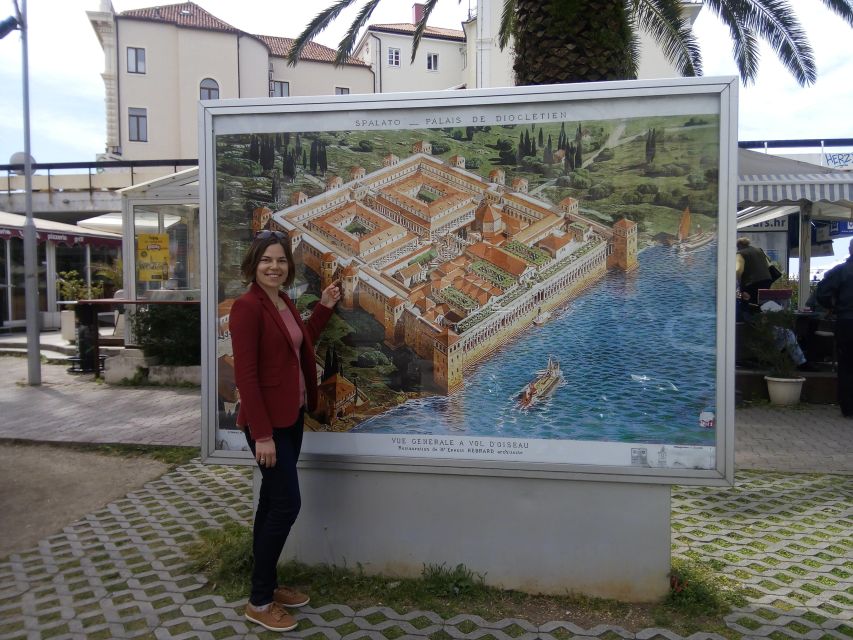
The tour ends back at Riva promenade by the sea. This finish isn’t random. It’s a natural reset. You step back out into open air, and your mind can connect the pieces: palace layout, squares outside, and the direction lines of the old center.
I like ending here because you can instantly build your own “next” plan. Whether you want to linger in the palace streets, hop between squares for cafés, or head toward a waterfront viewpoint, you’ve got the map in your head.
Also, the sea breeze helps after cobblestones. Minor thing, big effect.
Price and value: what $153 per group buys you in 105 minutes
At $153 per group (up to 15 people) for about 105 minutes, this tour sits in the mid-range for a private walking experience. The real question is whether it saves you time and mental effort.
For me, the value comes from three places:
- Private pacing: you’re not competing with other groups for attention at the palace gates and cathedral stops.
- Ticket-relevant architecture: you visit the palace and include guidance before and after the Substructures entrance fee, so you understand what the ticketed area adds.
- Context that improves the rest of your trip: a first-day orientation is often the best use of paid time in a dense old town like Split. You leave with a structure that makes your self-guided exploring faster and less confusing.
One note that might matter for your budget: the tour isn’t fully “all-in.” The Substructures entrance fee is extra. If you’re trying to keep costs tight, decide ahead of time whether stepping into the basements is a must for you.
Who this private Split tour is perfect for (and who should skip it)
This works best if you want:
- A first visit to Split and you’d like a clear route through Diocletian’s Palace and the main squares
- A guided story that links architecture to rulers and everyday life
- A private setup so your questions don’t get squeezed
Skip it (or at least think twice) if:
- You need wheelchair access, since it is not suitable for wheelchair users
- You hate walking or you’re trying to minimize time on cobblestones
- You already know the palace layout deeply and you’re only looking for a quick photo run
Should you book this Split Private Walking Tour?
Yes, if you’re the type of traveler who wants to understand what you’re seeing and then move through Split with confidence. A 105-minute private tour is a good match for an old town where layout and history are tightly linked.
I’d also book it if you care about communication quality. Sanja is highlighted for strong delivery, including French that one guest described as excellent, plus clear English and thoughtful answers. That matters because this is a place with layers—Roman, medieval, and later rule—and you’ll enjoy it more when the story is organized.
If you’re on a strict budget, consider whether the extra Substructures entrance fee fits your priorities. But if you want the kind of orientation that makes the rest of your days easier, this is a solid use of time.
FAQ
FAQ
Where does the tour meet?
You meet on Riva promenade by the bronze model of the historical core of Split, in front of the south entrance to Diocletian’s Palace.
How long is the tour?
The tour lasts about 105 minutes (about 1 hour and 45 minutes).
Is this a private tour?
Yes, it’s a private group tour.
What languages are offered?
The live guide speaks English, Italian, French, and Spanish.
What major sights do we cover?
You’ll see Diocletian’s Palace, including Peristil and the palace walls/gates, plus St. Domnius’s Cathedral, Jupiter’s Temple (external), and squares like Pjaca, Fruit Square, and Prokurative, finishing on the Riva.
Are entrance fees included?
Entrance fees to the Substructures (basements) are not included. The guide can still take you there, but you should budget for that entry fee.
Is the tour suitable for wheelchair users?
No. It is not suitable for wheelchair users.
When can I cancel for a full refund?
You can cancel up to 24 hours in advance for a full refund.
If you want, tell me your travel month and whether you’d definitely pay for the Substructures, and I’ll suggest a simple Split day plan that pairs well with this walk.